Five Hours Live on a Converted L18050: Ten-Plus Sheets, One Error (a Loose USB), ₹45 a Sheet, and Everything I Said While Waiting
Published 24 November 2023
A customer asked for a live video, so with no plan I pointed the camera at a converted L18050 on 23 November 2023 and printed for most of the afternoon. Ten-plus sheets, back to back, from AcroRIP, with the PE/PW module and IVFO fitted. One error in the first hour, and it was a USB cable. In between I answered whatever came in the chat: costs per sheet, powder sizes, white percentage, why not to print on a laptop, and why this printer is not an industrial machine even though it kept going like one. This post is the useful parts of three hours.
What the video shows
- 0:28 — Unplanned live: a modified L18050 sheet printer with the PE/PW module
- 7:16 — Sheets back to back; keep the next design ready while one prints
- 21:50 — Costs: about ₹45 per A3 at 80 percent coverage, consumables and maintenance
- 36:24 — The one error: a loose USB cable; use a dedicated PC, not a laptop
- 37:16 — Cleaning the rollers; a plain-paper feed test from Corel
- 50:58 — Pressing a tee at 160 °C; buy a decent tee, not a ₹30 one
- 65:32 — 80 to 100 micron powder; white at 40 to 60 percent
- 80:06 — No paper detection, no vacuum: it just prints
- 94:40 — Ten sheets done; no lines, no errors
- 109:14 — Transfers on tees: density and brightness
- 123:48 — Combining small jobs on one sheet
- 138:22 — Only desktop DTF under ₹1 lakh at the time; not an industrial printer
- 152:56 — Module exports to Thailand, Korea, Indonesia
- 167:30 — A 27-inch roll trial, explicitly not a recommendation
The setup and the rhythm
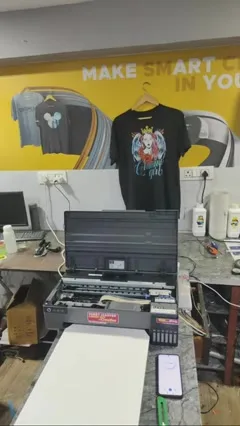
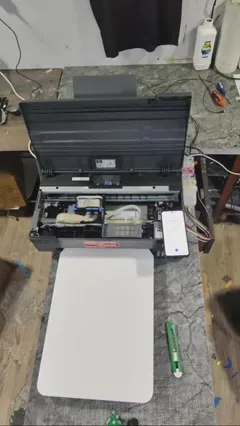
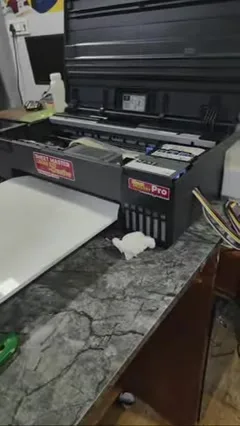
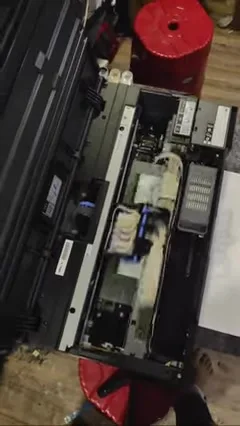
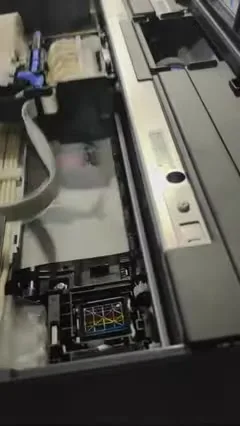
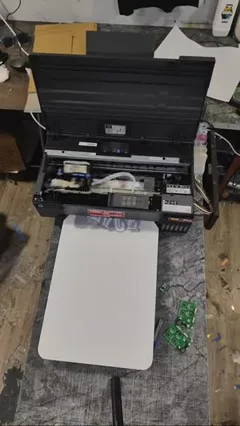
A converted L18050 as a sheet printer: PE/PW bypass so no tape and no paper detection, IVFO so the speed holds, an XP600-style manifold, an output tray and no vacuum. The rhythm all afternoon: send a sheet from AcroRIP, and while it prints, get the next design mirrored and ready. Never sit and watch the printer; take the sheet out, powder it, cure it, load the next.
What a sheet costs
Someone asked, so I worked it out on air: with sheet, ink, powder and maintenance included, about ₹45 for an A3 at around 80 percent ink coverage. Use regular-quality sheets, not premium ₹30 to ₹40 ones, or the maths does not work; the PE/PW module is what lets the printer feed regular sheets without ejecting them.
The one error
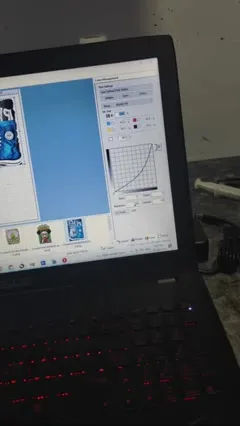
Early on the printer disconnected and pulled a sheet in. The cause was the USB cable, not tight. Two lessons I repeated for the rest of the stream: the USB connection must be intact, and the PC must be dedicated; if you design on the same machine while it rips, ripping slows and jobs stutter. Use a PC, not a laptop, and do nothing else on it while it prints.
Powder, white, press
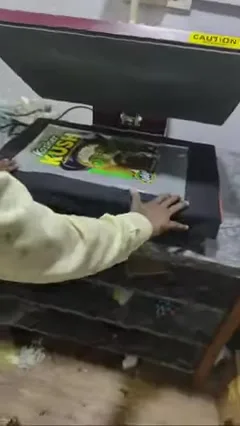
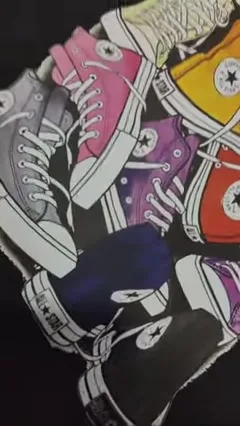
Hot-melt in the 80 to 100 micron range. White at 40 to 60 percent depending on the design; I went to 60 for the darker tees. Curing in the Summit oven: the powder should melt to a shine, not go dark. Press at 160 °C for 10 to 12 seconds on a decent tee, ₹130 to ₹140, not ₹30; the print is only as good as the fabric under it.
What this printer is, and is not
At the time it was the only desktop DTF under ₹1 lakh, with an industrial-grade XP600 head. It kept printing non-stop for the afternoon because I wanted to find its errors; you should not run it like that. It is a starter printer, not an industrial one, and every six months it wants a manifold and dampers. The 27-inch roll trial near the end was exactly that, a trial, said three times on air. We were the first with a working PE/PW module on this printer and export it to Thailand, Korea and Indonesia.
Today
The printer: converted L18050. The modules: PE/PW bypass and IVFO. The cost maths in writing: cost per metre. The six-monthly job: manifold replacement. The oven: A3 oven.
Frequently asked questions
How much does an A3 DTF sheet cost to print on a converted L18050?
About ₹45 at 80 percent coverage, consumables and maintenance included, using regular-quality sheets.
What caused the only error in five hours?
A loose USB cable. Keep the connection tight and use a dedicated PC.
What white percentage and powder?
40 to 60 percent white; 80 to 100 micron hot-melt powder.
Is the L18050 an industrial printer?
No. It ran all afternoon on the live because I was testing it; treat it as a starter printer with six-monthly manifold and damper changes.
Did you recommend roll printing on it?
No. The 27-inch roll near the end was a trial, stated as such.
Related guides
- DTF Printing Cost Per Meter — Real Numbers from a Print Shop
- DTF Printer Buying Guide — What to Look For (and Avoid) in India
Want a live demo of your own?
WhatsApp a date; we run it on video call from the Navi Mumbai or Hyderabad unit.
WhatsApp +91 86555 56060More videos: Epson L18050 / L8050 DTF conversion
- Epson L18050 and L8050 Converted to DTF: The Honest, Uncut Review
- Epson L18050 DTF Without Tape: PE/PW Bypass Module, Dampers, Capping and a Live Print
- L18050 Roll Conversion Kit: ASF and PE/PW Bypassed, Forward-Reverse Film Control
- Epson L18050 DTF Conversion, Step by Step: The Complete 38-Minute DIY Guide
- Our Converted L18050 DTF Printer: What We Modify, How You Maintain It, and Who Should Buy It
- Real Facts About the DTF-Modified Epson L805 and L1800: Is This Business for You?