A Dedicated DTF Printer for Startups: Heavy-Duty CR Motor, Roll Feeding, Touch Panel and Anti-Collision Sensors in One Minute
Published 6 October 2024
One minute, captions only, filmed on the floor at CGI Mumbai: a single-head dedicated DTF printer running a roll, and four captions that are the whole argument for buying a dedicated machine instead of converting another desktop printer. Heavy-duty CR motor and drive track. Roll feeding system. Touch panel control. Anti-collision sensors. If you are a startup choosing your first real printer, those four are the list.
What the video shows
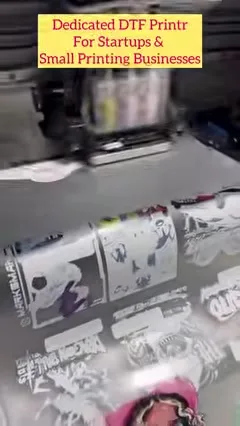
- 0:02 — Dedicated DTF printer for startups and small printing businesses
- 0:12 — Heavy-duty CR motor and drive track
- 0:22 — Roll feeding system
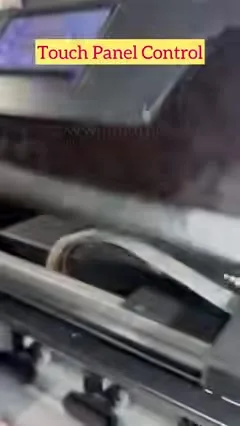
- 0:33 — Touch panel control
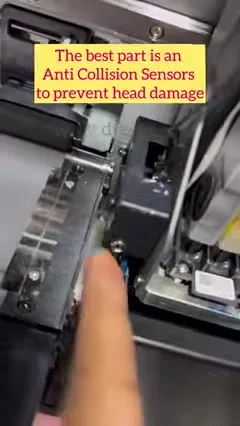
- 0:38 — Anti-collision sensors to prevent head damage
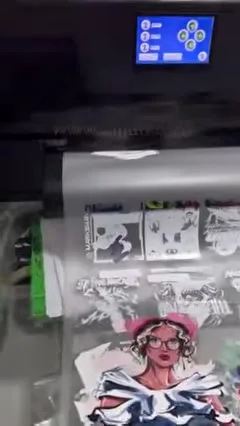
- 0:48 — Printing a white-ink roll
CR motor and drive track
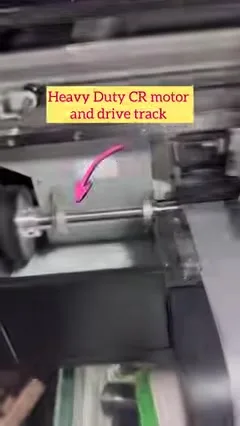
The carriage motor on a converted desktop printer was built to move a light head over paper a few times a day. A dedicated machine carries the head on a heavy-duty motor and track that runs rolls all day without the speed drop or the burn-out that software reverse causes on an L18050. That one part decides how long the printer stays a printer.
Roll feeding and touch panel
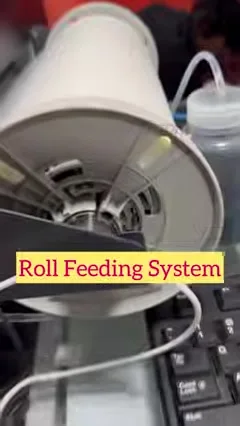
Roll feeding is built into the machine, not bolted onto it: the roll sits on its holder at the back, feeds under tension, and the printer handles the end of a page like it is not there. Settings, cleaning, test prints and origin sit on a touch panel on the printer, so you are not reaching for the PC for every adjustment.
Anti-collision sensors
The best part, as the caption says. If film lifts, a sensor on the carriage side stops the head before it strikes. On a converted desktop printer a strike is a new head and a week; here it is a pause.
Which Studio
This is the X-Arc 600 Studio, the single head we recommend as a first dedicated printer: with automatic shaker at ₹1,60,000 + GST, one-year mainboard warranty. The full feature tour is here; how it compares to a converted L18050 for a startup is in the buying guide.
Frequently asked questions
What should a startup's first dedicated DTF printer have?
A heavy-duty carriage motor and track, built-in roll feeding, a touch panel, and anti-collision sensors.
Why does the CR motor matter?
It moves the head all day. Desktop conversions use a light motor that slows or burns under roll work.
What do anti-collision sensors do?
Stop the head before lifted film strikes it. A pause instead of a new head.
Which printer is in the clip?
The X-Arc 600 Studio single head.
Related guides
- DTF Printer Buying Guide — What to Look For (and Avoid) in India
- Starting a DTF Printing Business in India — Real Cost Breakdown
First dedicated printer?
WhatsApp your daily volume and city; installation is on site, pan India.
WhatsApp +91 86555 56060More videos: Dedicated DTF printers (X-ARC, Yinstar)
- X-ARC XP600 Single Head DTF Printer: Every Feature Shown in the Video, Explained
- Best DTF Printer in India for Small and Large Shops: The X-ARC 600 Single Head Review
- Why the X-ARC Pro Is Different: Five Parts That Decide Whether a DTF Printer Works or Just Needs Maintenance
- Which DTF Printer Should You Buy? L18050 vs 12-Inch Dual Head, by Daily Volume
- X-Arc 600 Pro in 89 Seconds: Auto Cleaning, Anti-Collision Sensors, Capping Unit You Clean From Outside
- L1800, L8180 or a 12-Inch XP600 Dual Head? The 2022 Video on Which DTF Printer to Buy, in English