Best DTF Printer in India for Small and Large Shops: The X-ARC 600 Single Head Review
Published 14 December 2024
This is the review I point people to when they ask which DTF printer to buy. It is in Hindi, eight minutes, filmed with the X-ARC 600 single head printing a roll of combination DTF and vinyl stickers in the background. I did not script it; I walked around the machine and said what I check before I would buy any DTF printer, dedicated or converted. Here it is in English, with the parts of the machine the camera was pointing at.
What the video shows
- 0:00 — Combination print: DTF plus vinyl on the same job
- 0:30 — The X-ARC 600 single XP600 head with powder shaker
- 0:45 — The DTF process: print, white layer, powder, cure, press
- 1:20 — Must-have feature 1: anti-collision sensors on both sides of the head
- 1:42 — Must-have feature 2: wide pinch rollers, no alignment drift, no white outline
- 2:03 — Must-have feature 3: pre-heater and vacuum; dedicated, not converted
- 2:30 — Control panel: pause, resume, head clean mid-print, repeat job
- 3:15 — Ink circulation driven by the mainboard
- 3:34 — Roll feeding: 12 or 13 inch rolls, 11 to 12 inch print
- 3:55 — Powder shaker, pre-heater, auto rewind, flash curing
- 4:30 — Build quality: paper rod, belt and CR motor, grease points
- 4:55 — Maintenance you can do yourself: capping, dampers, head from outside
- 5:34 — Warranty: one year on the mainboard and head board only
- 5:55 — Low-sediment Jap-X inks and XP600 head life
- 6:30 — Idle for 4 or 5 days? Solution in the capping, or the auto-clean timer
- 7:00 — Three ways to buy: printer only, with oven, with powder shaker
- 7:22 — Original Maintop with dongle, and the print manager
Start with the process, not the machine
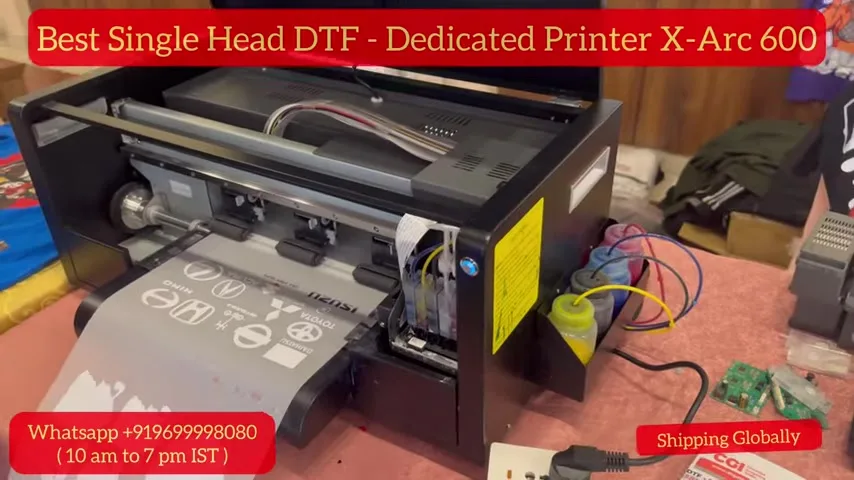
DTF has four steps and the printer only does the first two: it prints your colours, lays a white layer on top automatically, then the sheet goes through powder and into the curing unit. After that you have a sticker you heat-press onto the garment. The job running behind me in the video is a combination: DTF stickers and vinyl, printed on this 12-inch machine.
Three features I check on any DTF printer
These are not nice-to-haves. The video calls them mandatory, and I still do.
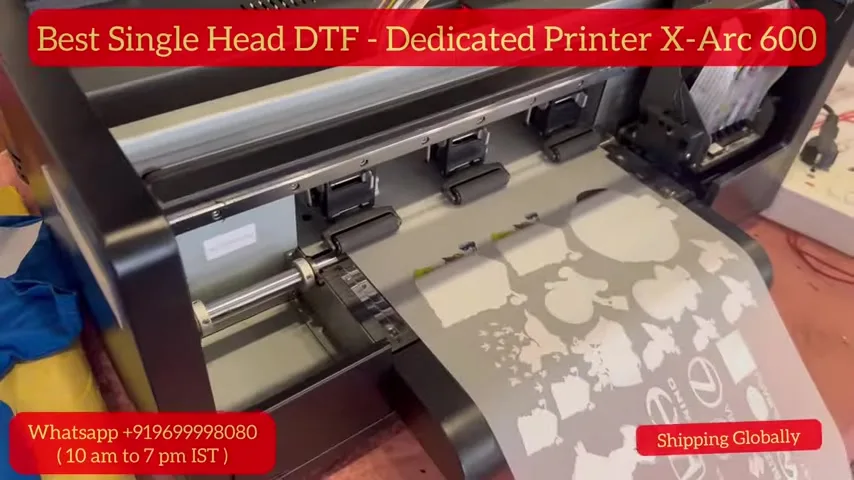
- Anti-collision sensors on both sides of the print head. Most people skip this when comparing prices. When a film edge lifts or a sheet jams, the sensor stops the carriage before the head hits it. The head is the most expensive part of the printer; this is what protects it.
- Wide pinch rollers. Narrow rollers let the film drift during feeding, and the result is a visible white outline around the print. I turned the machine around in the video to show the back of the sheet: almost no white outline, because the rollers hold the film straight.
- Pre-heater, with vacuum. People say you do not need it. You do, the moment the weather changes. This machine has both built in.
And one more thing, which is not a feature but a category: this is a dedicated DTF printer, not a converted one. I sell converted printers too, and four-head, eight-head and 48-inch machines; the point is to know which you are buying.
What the control panel does
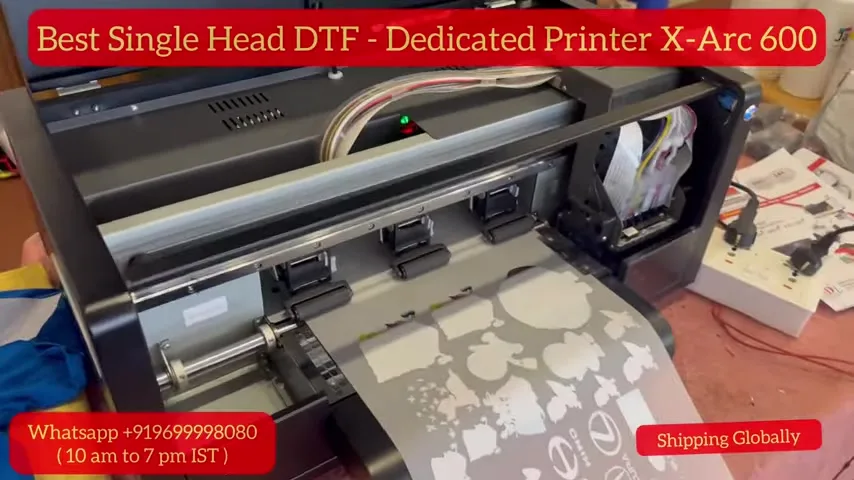
Everything runs from the panel. I paused the print to film and resumed it from there. If you see a line forming mid-print and want to clean the head, you do it from the panel without cancelling the job. A finished job can be repeated from memory. The newer model also has a stand so the cover cannot drop while printing.
Ink circulation wired to the mainboard
Almost every DTF printer circulates white ink. On this one the circulation is connected to the mainboard, so the printer itself detects whether it is printing and circulates accordingly, rather than running on a dumb timer. Think about that when you compare printers; it is the kind of detail that decides how much maintenance you do a year later.
Rolls, shaker, heaters
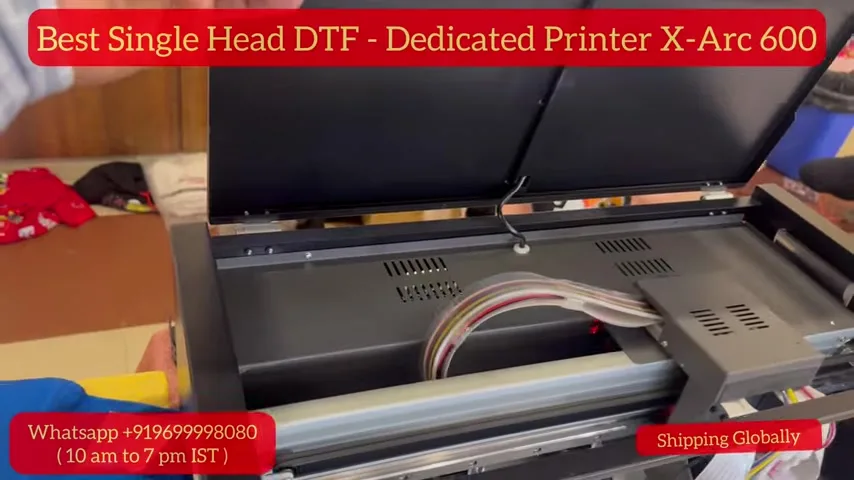
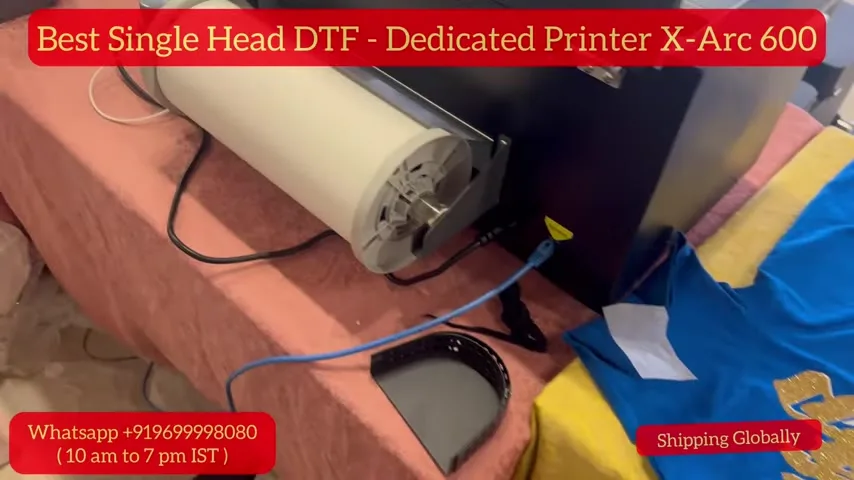
It takes a 12-inch roll, or 13-inch, and you print up to about 11 to 12 inches wide. The powder shaker is attached (I said in the video I would change its design a bit). The pre-heater is essential; the roll rewinds automatically; and the flash heaters that do the curing were chosen because their power consumption is low, which matters when the machine runs all day.
Build quality: look at the back, not the paint
Instead of judging a printer by how the body looks, look at the paper-movement rod at the back, the belt that drives the carriage motor, and whether there are grease points. The capping station on this machine can be changed from outside, manually.
Maintenance, honestly
People ask what maintenance comes with it. If your ink quality is good, not much, but it is not zero. You will change the capping unit, you will change dampers, and you can do both yourself from outside the machine; no technician needed. The print head too can be replaced from outside.
Warranty, said plainly
One year on the mainboard and the head board. Nothing else is covered, and to be honest that is because every other part touches ink. We keep both boards in stock. The print head is not covered once it is installed and tested; with the low-sediment Jap-X inks we use, you should get about a year from an XP600, depending on how you run it. Low sediment means the ink does not settle quickly, which is what extends head life.
If you have to leave it idle
Stopping for four or five days? Two options. Fill the capping with solution so the head stays wet from below. Or leave the printer on auto head-cleaning and set the timer in the software: once every eight hours, nine hours, whatever you choose.
Three ways to buy, and what is in the box
- Printer only, if you already have a curing set-up or a heat press
- Printer with oven
- Printer with the automatic powder shaker, which is the machine in this video
Every package ships with the original Maintop RIP with its dongle (people sell pirated copies; ours is original) and the print manager software. Current pricing and the catalogue are on the product pages: X-ARC 12-inch single head with manual oven at ₹1,36,000 + GST, and the X-ARC 600 PRO with automatic shaker at ₹1,49,000 + GST. Shipping worldwide. Questions on WhatsApp.
Frequently asked questions
What makes a DTF printer safe for the print head?
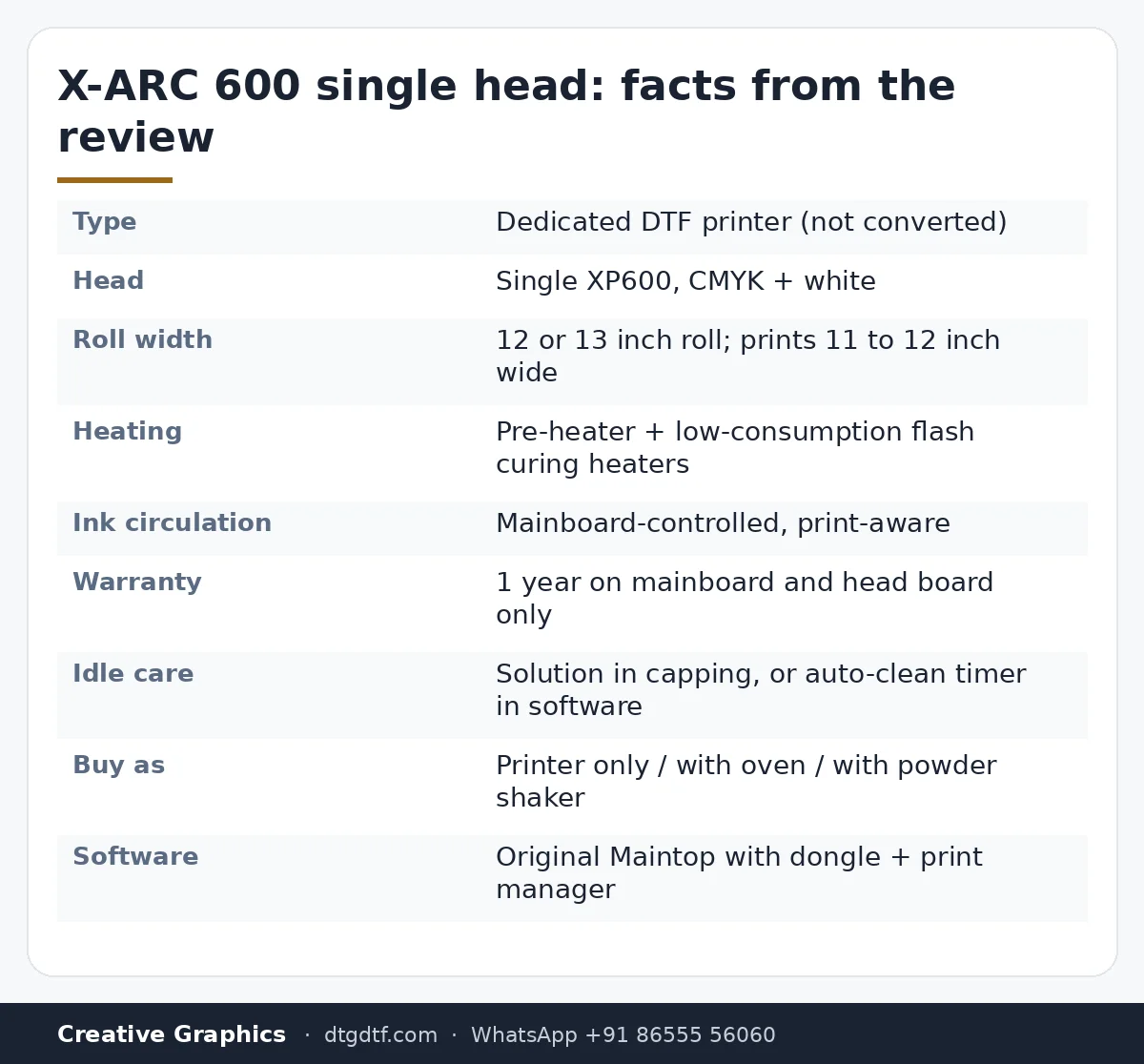
Anti-collision sensors on both sides of the head. They stop the carriage before a lifted film edge or jam can damage the head.
Why does my print have a white outline around it?
Film drift during feeding. Wide pinch rollers hold the film straight, which is why the back of the sheet in the video shows almost none.
Is the X-ARC 600 converted or dedicated?
Dedicated. Built for DTF from the factory. We also sell converted Epson printers if that suits your budget.
What is covered by warranty?
One year on the mainboard and head board. Other parts touch ink and are not covered; the print head is excluded after installation and testing.
How long should the XP600 head last?
About a year with low-sediment Jap-X inks, depending on usage and daily care.
What if I stop printing for a few days?
Either fill the capping with cleaning solution or leave auto head-cleaning on with a timer set in the software.
What software comes with it?
Original Maintop RIP with dongle and the print manager, with every package.
Related guides
- Best DTF Printer in India (2026) — Honest Comparison
- DTF Printer Buying Guide — What to Look For (and Avoid) in India
- XP600 vs i3200 Print Head — Which Should You Buy?
Want the catalogue with all three packages?
Message me on WhatsApp and I will send the current catalogue and a demo video of the exact machine.
WhatsApp +91 86555 56060