X-ARC XP600 Single Head DTF Printer: Every Feature Shown in the Video, Explained
Published 19 December 2024
This 80-second video is the most-watched clip on our channel, with over 5.4 lakh views. It shows the X-ARC XP600 single head DTF printer the day it launched. Below is the video, then a plain-English explanation of every feature it points at, what each one means for a small print shop, and the current price in India.
What the video shows
- 0:00 — Brand-new XP600 X-ARC single head DTF printer
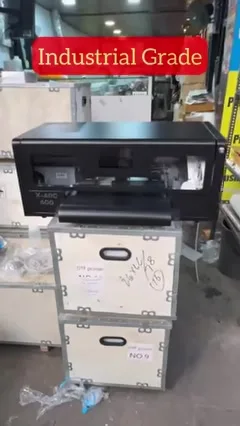
- 0:05 — Industrial-grade features in a single-head machine
- 0:11 — Vacuum bed and pre-heater control
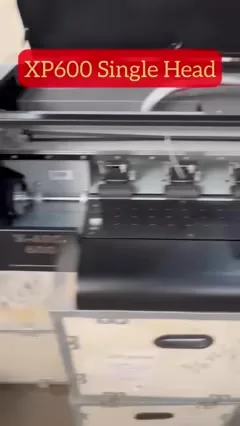
- 0:16 — Metal-mesh dampers, bigger dampers for white
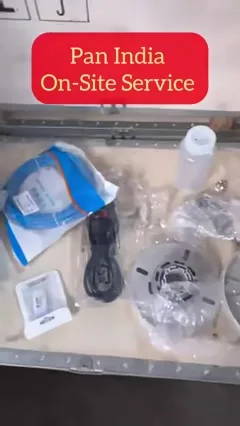
- 0:23 — Secure box packing and all attachments
- 0:30 — Maintop RIP software (original, with dongle)
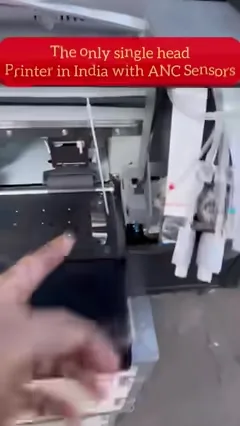
- 0:35 — Anti-collision sensors on both sides
- 0:41 — Simple inking system with white ink circulation
- 0:52 — Wider pinch rollers and vacuum
- 1:00 — Pan-India shipping, on-site installation option
- 1:06 — Industrial-grade capping station
Industrial features on a single-head machine
The point of the video is in its first sentence: this is a single-head printer with the feature list of an industrial one. A single XP600 head keeps the price near a converted Epson, but the frame, bed, ink path and electronics are the ones used on our two-head and 24-inch machines.
Vacuum bed and pre-heater
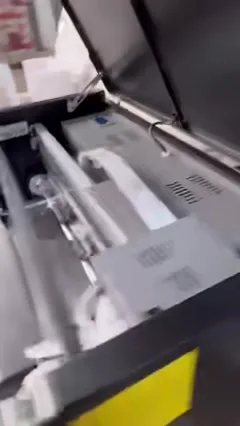
The vacuum holds the PET film flat against the bed while it prints. Without it, the film lifts at the edges, the head gap changes and you get banding and head strikes. The pre-heater warms the film so the ink lands and levels evenly, which is what gives the clean whites and sharp small text in the test prints.
Metal-mesh dampers, bigger ones for white
Dampers sit between the ink line and the head and smooth out pressure. The white channels get larger dampers because white ink is thicker and used in far higher volume than any colour. The metal mesh filters out dried ink particles before they reach the nozzles. These are supplied with the machine, not an add-on.
Maintop RIP with dongle
The printer ships with original Maintop RIP software and its hardware dongle. The RIP generates the white underbase, applies the colour profile and sets print speed. It is installed and profiled during setup, so you print from day one rather than tuning software.
Anti-collision sensors on both sides
This is the feature the video calls out as the headline. A sensor on each side of the feeder watches for a lifted film edge or a jam and stops the carriage before the head can hit it. A head strike is the most common way a DTF print head is destroyed, and the head is the costliest part of the printer, so this sensor pays for itself the first time it trips.
White ink circulation
White DTF ink settles. The built-in circulation pump keeps it moving through the lines and dampers whenever the printer is on, so the first print of the morning has a solid white underbase instead of grey, patchy coverage. The circulation is driven by the mainboard, not a separate timer, so it runs when it should.
Wider pinch rollers
Pinch rollers feed the film through the printer. Wider rollers grip more of the film, so a 12-inch roll tracks straight across a long run instead of drifting sideways, which is what causes skewed prints and film waste on cheaper machines.
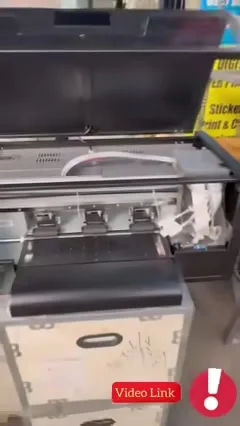
Industrial-grade capping station
The capping station seals the head when the printer is idle and does the cleaning cycles. An industrial station keeps a better seal, which is what stops nozzles drying out overnight and reduces the number of cleaning cycles, and therefore the ink wasted, each day.
Features not in the video
- XP600 A+ head with no speed drop at production settings
- Dedicated Colorix mainboard with a touch-panel control
- Ink circulation wired to the mainboard, so it runs automatically
- Tested by us for over 12 months before the launch you see in the video
Price, warranty and shipping in India
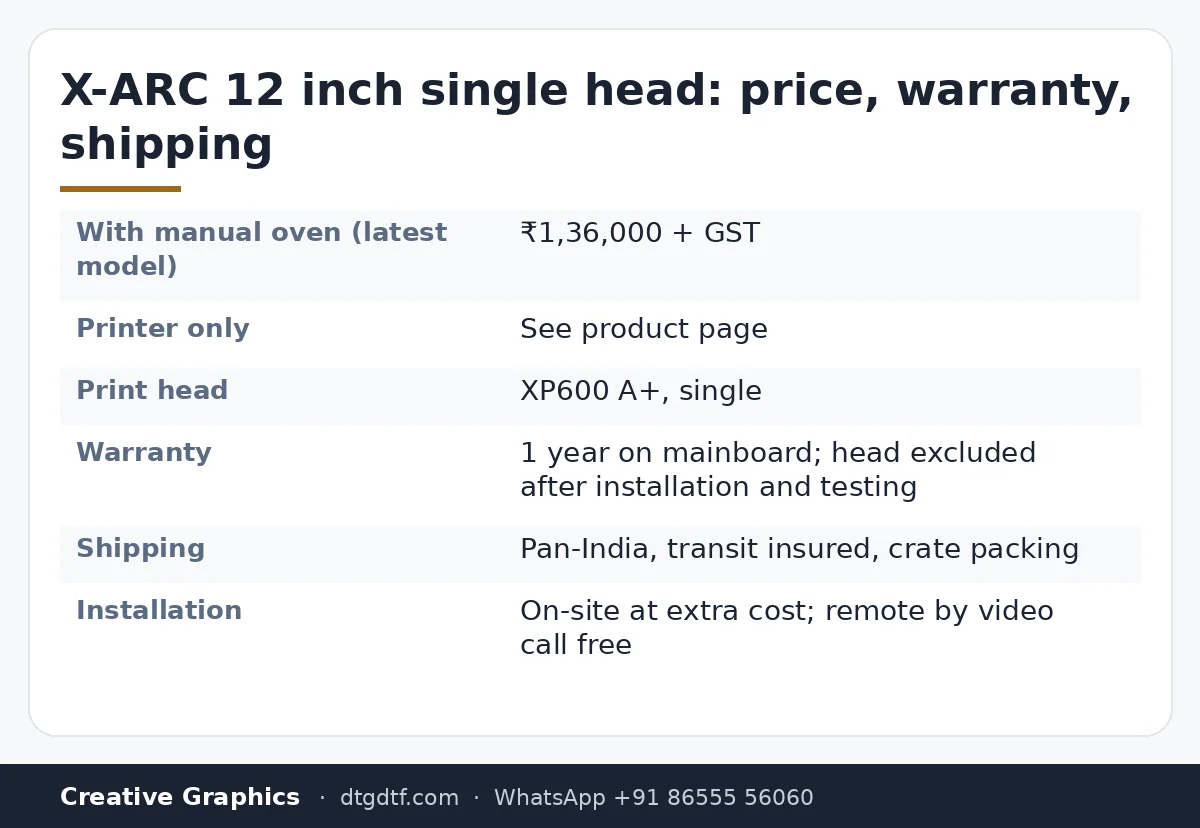
- X-ARC 12 inch single head with manual oven (latest model): ₹1,36,000 + GST. This is the complete starter setup.
- X-ARC 12 inch single head, printer only: for shops that already own an oven or powder shaker.
- Warranty: 1 year on the mainboard. The print head is not covered after installation and testing.
- Shipping: secure box packing, pan-India, with transit insurance. On-site installation and training available at extra cost; remote installation over video call is free.
- Consumables from the same shop: Jap-X DTF inks, PET film and hotmelt powder, XP600 heads, dampers and spares.
Who this printer is for
A first DTF machine for a t-shirt, hoodie or sticker business that wants to skip the converted-Epson stage and the head replacements that usually come with it. One head, so you are not paying for speed you do not need yet, but the bed, ink path and sensors mean the machine will not be the thing that limits you as orders grow. If you are already doing 200 or more metres a month, look at the dual-head and 24-inch X-ARC and Yinstar models instead.
Frequently asked questions
Is the X-ARC XP600 single head printer good for a startup?
Yes. It is built for a one-person shop doing t-shirts, hoodies and stickers: one XP600 A+ head keeps the price low, while the vacuum bed, white ink circulation and anti-collision sensors are the same features you find on bigger industrial machines.
What does the anti-collision sensor actually do?
A sensor on each side of the feeder stops the carriage before the head can hit a curled film edge or a stuck roll. Head strikes are the most common way a DTF print head gets damaged, so this one feature protects the most expensive part of the machine.
Why does white ink need a circulation system?
White DTF ink is heavy with titanium dioxide and settles within hours. The pump keeps it moving through the lines and dampers, so you get a clean white underbase on the first print of the day instead of grey, clogged nozzles.
Which RIP software comes with it?
Original Maintop RIP with a hardware dongle. It handles the white underbase, colour profiles and print speeds. We set it up during installation.
What is the warranty?
One year on the mainboard. The print head is not covered once it has been installed and tested, because head life depends on daily cleaning, ink quality and how the machine is run. Every printer is tested before dispatch.
Is installation included?
The printer ships pan-India in secure box packing with all attachments. On-site installation and training is available at extra cost; remote installation over video call is free.
Printer only, or with the oven?
The printer-only model suits shops that already have a powder shaker or oven. The model with the manual oven is the complete starter setup: print, powder, cure, press.
Related guides
- XP600 vs i3200 Print Head — Which Should You Buy?
- Best DTF Printer in India (2026) — Honest Comparison
- DTF Printer Buying Guide — What to Look For (and Avoid) in India
- Starting a DTF Printing Business in India — Real Cost Breakdown
See it print, live
Book a demo at Nerul, Navi Mumbai, or ask for a video demo on WhatsApp. We print your artwork on the machine before you decide.
WhatsApp +91 86555 56060