Specialty Screen Printing Inks Up Close: High Density, Puff, Gel, Metallic and One-Stroke White, and Where DTF Takes Over
Published 29 August 2021
Not every video on the channel is about our own machines. At the Ahmedabad expo in 2021 I spent seven minutes at a screen-ink maker's table because their samples answered a question I get weekly: what can screen printing do that DTF cannot? High-density raised prints, puff, a direct gel effect, metallics, gloss and matt. The audio on this upload is poor and it was a vendor's table, so the post sticks to what the samples and recipe cards show.
What the video shows
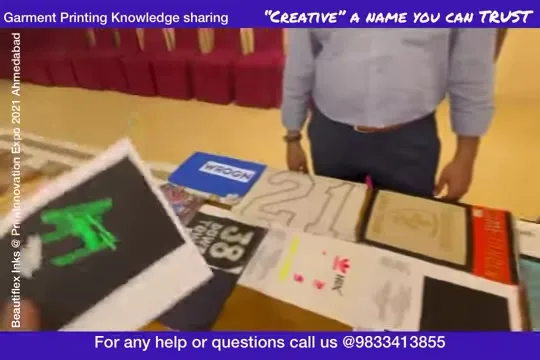
- 0:17 — The sample table: high-density, puff, metallic, gloss and matt
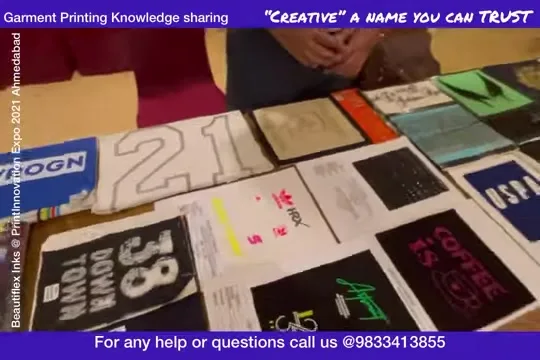
- 0:51 — Raised high-density prints
- 1:26 — Metallic and foil-look samples
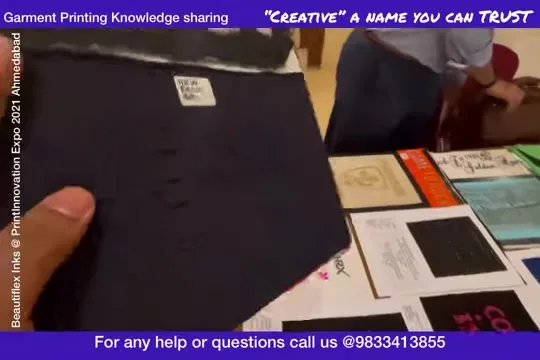
- 2:00 — Dark fabric samples: pink, gold, blue
- 2:34 — Puff and texture on denim
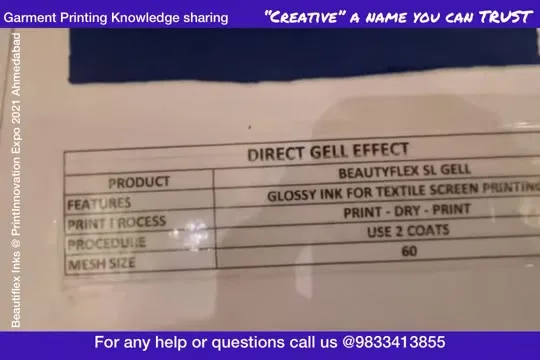
- 3:09 — The recipe card: direct gel effect, two coats, print-dry-print, 60 mesh
- 3:43 — Number prints and sports jerseys
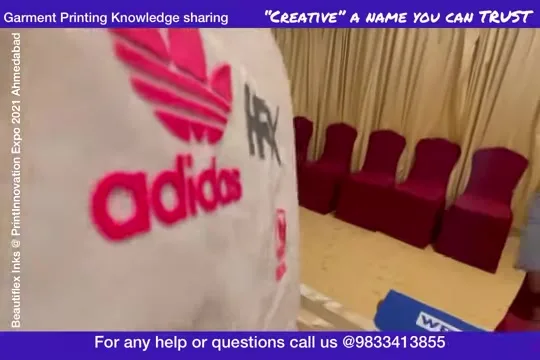
- 4:18 — Three-stripe raised print on a hoodie
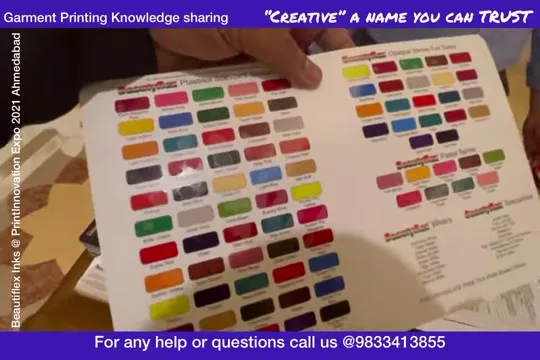
- 4:52 — The colour swatch book
- 5:26 — Chevron texture sample
- 6:01 — Logos and slogans in HD
- 6:35 — The ink maker at his table
What screen does that DTF does not
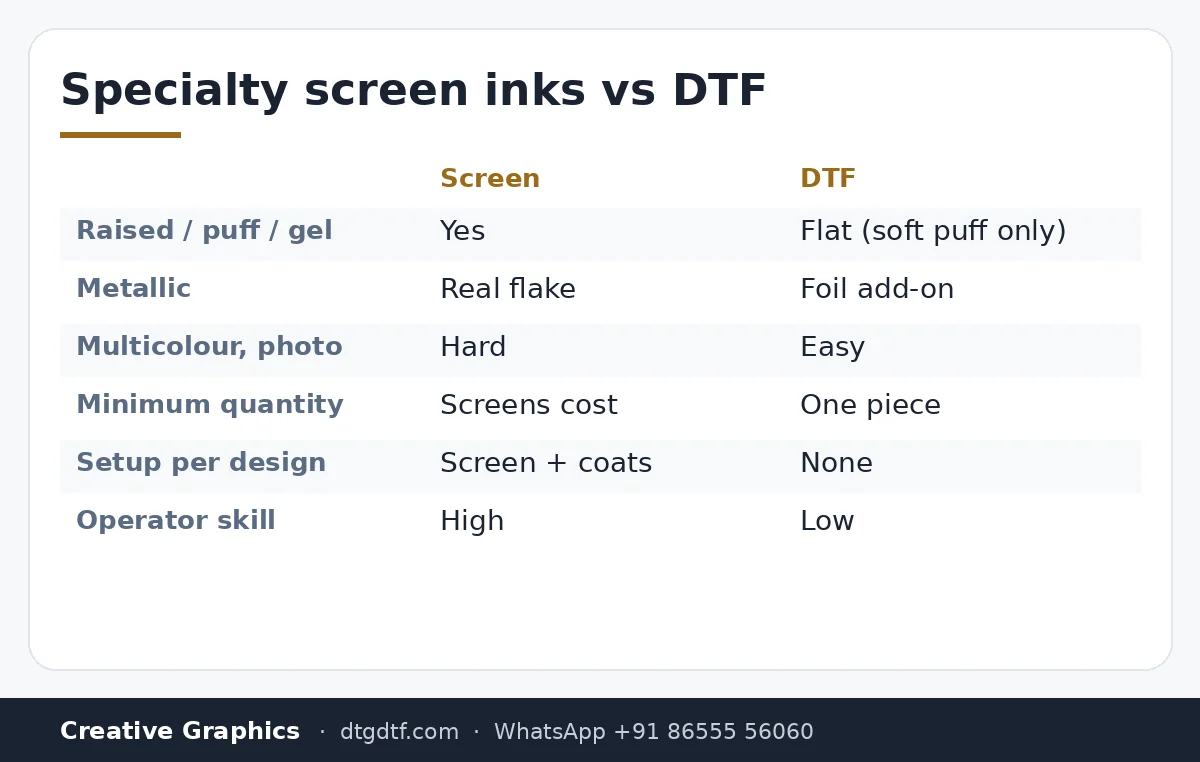
Raised prints. A high-density ink laid through a thick stencil in two coats stands a millimetre or more off the fabric; puff ink rises in the dryer; a gel ink gives a clear raised gloss; metallics carry real flake. DTF prints flat, and even with puff powder it is a different, softer effect. If a customer wants a sports-number look with a hard edge and height, screen is still the answer.
The recipe cards
Each sample came with a card. The one I filmed: direct gel effect, a glossy ink for textile screen printing, procedure print, dry, print, use two coats, mesh size 60. That is the real cost of specialty screen work: a screen, two passes, drying between, and an operator who knows the mesh.
Where DTF takes over
Multicolour artwork, photographs, one piece or ten, no screens, no setup, same price for the first as the hundredth. That is the whole DTF business, and it is why we moved our own production to it. Most shops that survive run both: screen for raised and bulk single-colour, DTF for everything else. The comparison with numbers is in DTF vs sublimation vs screen printing, and our DTF transfers are available by the metre from the printing service.
Frequently asked questions
What can screen printing do that DTF cannot?
Raised high-density, puff, gel and true metallic finishes with a hard edge.
What does a high-density print need?
A thick stencil, two coats, drying between coats, and a coarse mesh around 60.
When is DTF better?
Multicolour, photographic, small quantities, no screens, same price per piece from one to a hundred.
Should a shop run both?
Most that last do: screen for raised and bulk one-colour, DTF for the rest.
Related guides
- DTF vs Sublimation vs Screen Printing — Which is Right for You?
- DTF Printing Cost Per Meter — Real Numbers from a Print Shop
Raised print or full colour?
Send the artwork on WhatsApp and we will say which process suits it, honestly, even if it is not DTF.
WhatsApp +91 86555 56060More videos: DTF printing service and costs
- DTF Heat Transfer Stickers from ₹150 per Metre: What the Video Shows and What You Get
- Is Your Print Cracking After the First Wash? That's the Sticker, Not the Shirt
- The Right Way to Heat Press a DTF Transfer: Pre-Press, 150 to 160 °C for 10 to 15 Seconds, Peel, Re-Press, and the Neck Label
- What Else DTF Prints On: Tote Bags, Umbrellas, Leather Sleeves, Jute, Nylon, Single Colour or Full Colour
- The 16 × 24 Double-Bed Automatic Heat Press, 100 Percent Made in India: Die-Cast Aluminium, Replaceable Coil, Auto Mode, Emergency Stop
- The 16 × 24 Monster: An Indian Fully Automatic Heat Press With a One-Year Warranty and Even Temperature Across the Plate