DTF Explained in 2021: One Process for White and Dark Tees, and What the Setup Cost Is Made Of
Published 12 February 2021
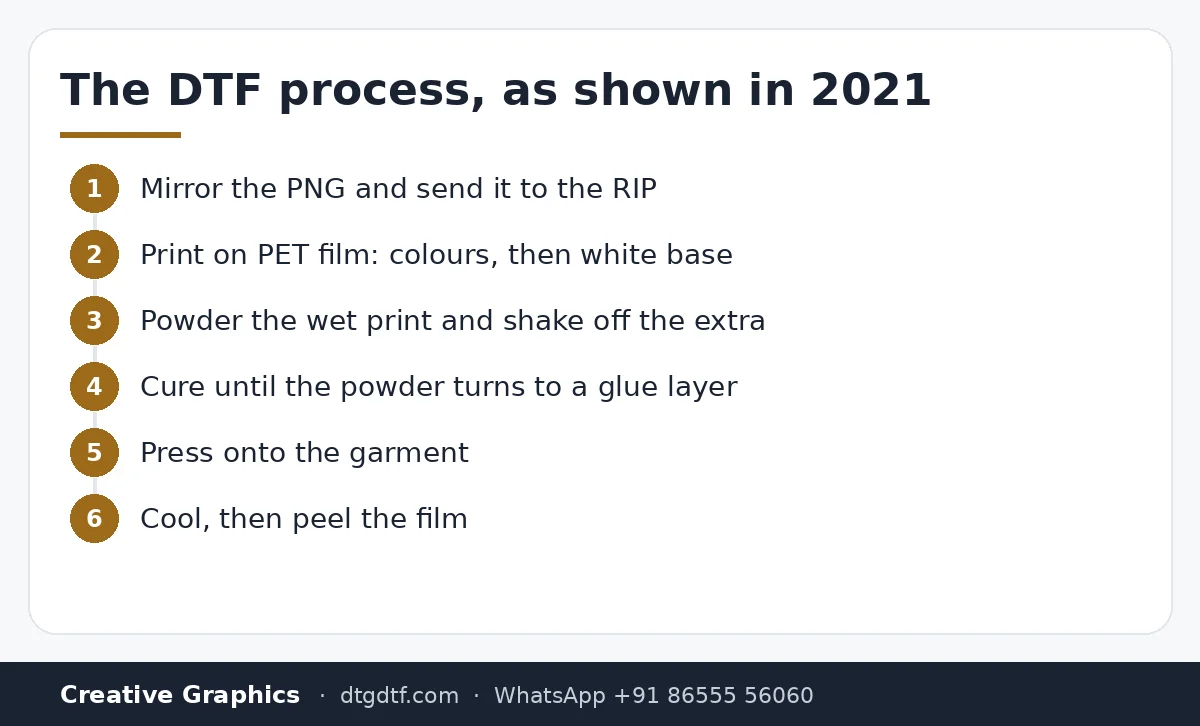
February 2021. Most of India had not heard of DTF and we had just switched our DTG work over to it. This is the first video I made on the process: print the design mirrored on PET film, colours and white base in one pass, powder it, cure it, press it, peel it. The audio on this old upload is poor, so I am writing from what is on screen and what I remember saying. The process has not changed since; the prices have, so those are linked at the end.
What the video shows
- 0:00 — Why we moved from DTG to DTF
- 0:23 — One process for white and dark tees
- 0:55 — Mirror the PNG, send to the RIP
- 1:25 — Printing on PET film: colours first, white base over them
- 2:32 — Wash and water resistance compared to DTG
- 2:50 — Powder on the wet print, shake off the extra
- 3:44 — Cure, then press onto the garment
- 4:52 — Peel: a finished transfer on a white and a black tee
- 5:44 — What the cost is made of; also an alternative to screen printing
Why DTF, coming from DTG
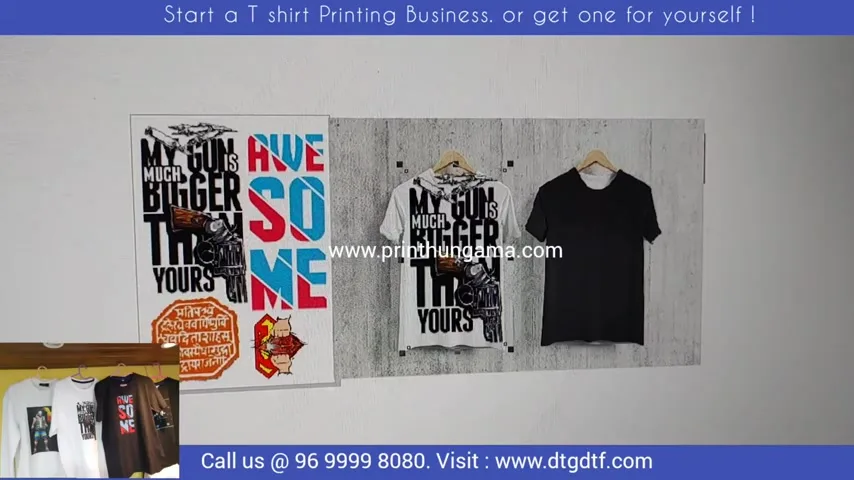
We ran DTG before this. DTG needs pretreatment on dark garments and a different routine for whites; it is slow and fussy. DTF is one process for both: the white ink goes onto the film, not the shirt, so a black tee and a white tee are pressed exactly the same way. That alone is why the channel turned to DTF.
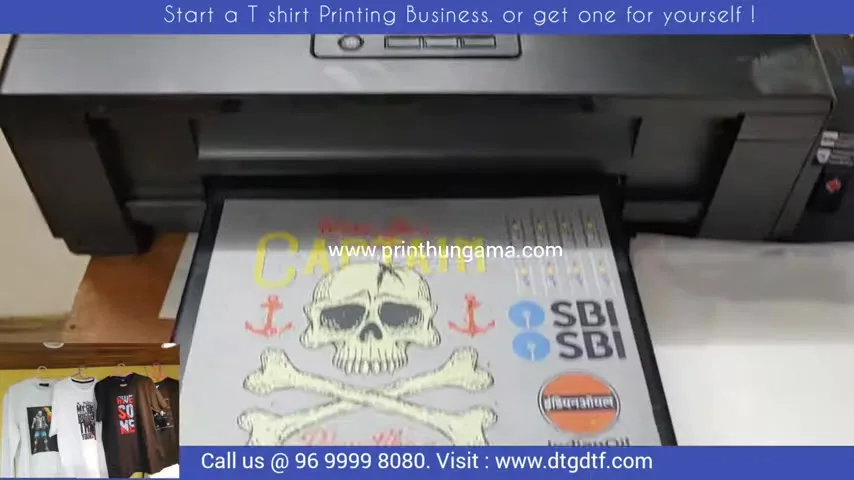
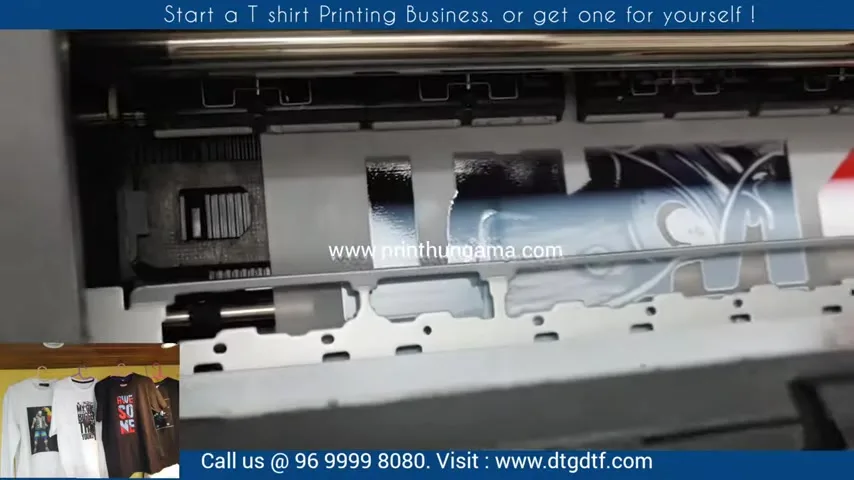
Print on film
The design is a PNG, mirrored, sent through the RIP to a converted Epson. On the film the colours go down first and the white base prints over them in the same pass, so when you flip the transfer onto the shirt the white sits underneath the colours. The film is PET, matte side up.
Powder, cure
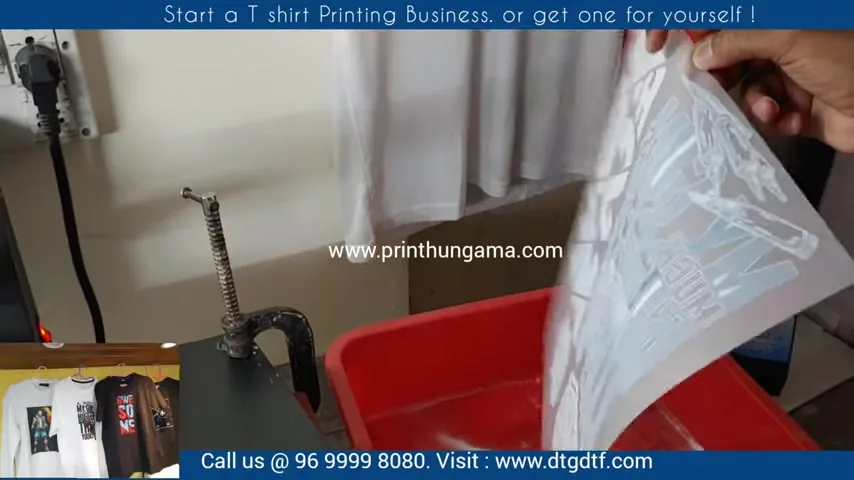
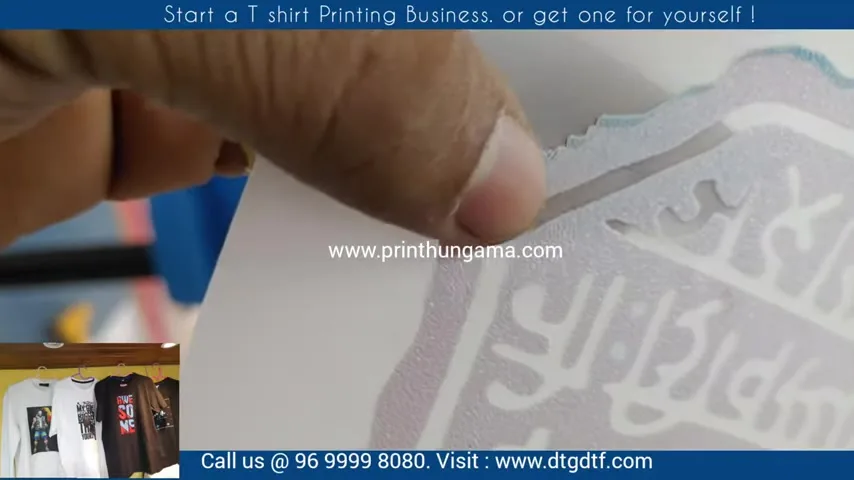
While the ink is wet, pour hot-melt powder over the print in a tray, shake it so it sticks only to the ink, and tip the extra back. Then cure the powder until it goes from grainy to a smooth glue layer; a heat press held above the film or a small oven both work.
Press and peel
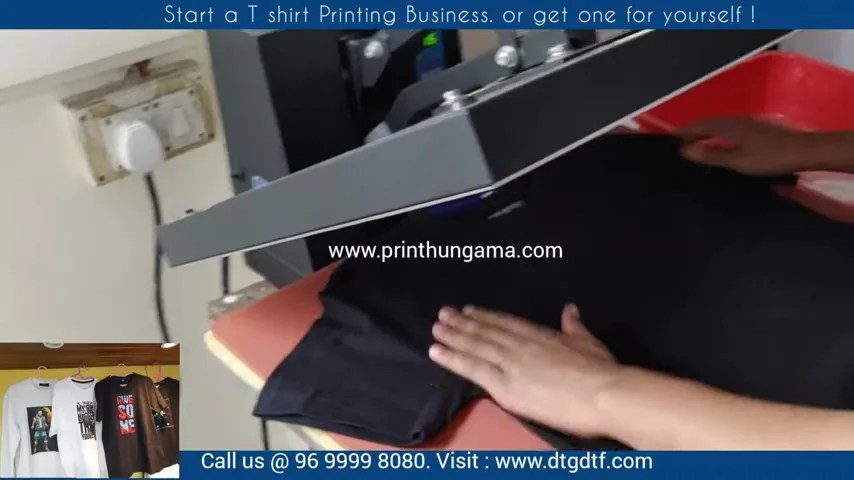
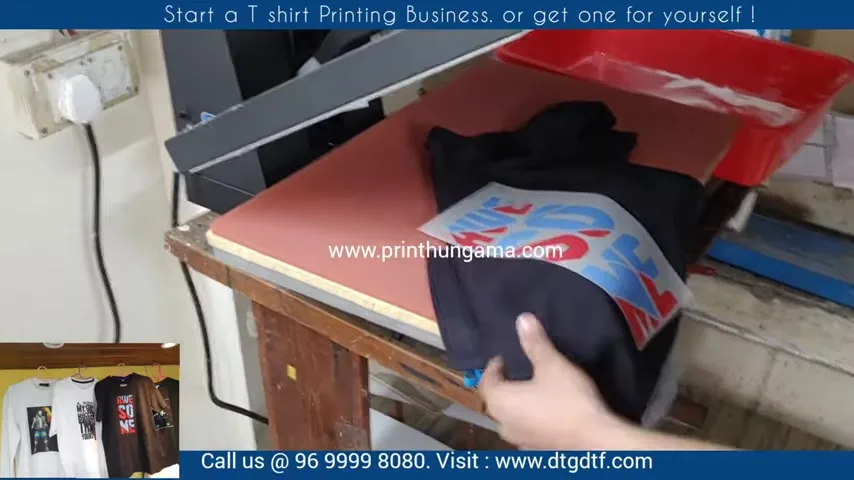
Lay the transfer on the shirt, press, let it cool, peel. Same steps for the white parrot tee and the black 'my gun is bigger' tee in the video. The print is wash-resistant and water-resistant in a way DTG never was for us, and the detail is better. It is also a serious alternative to screen printing for short runs.
What the cost is made of
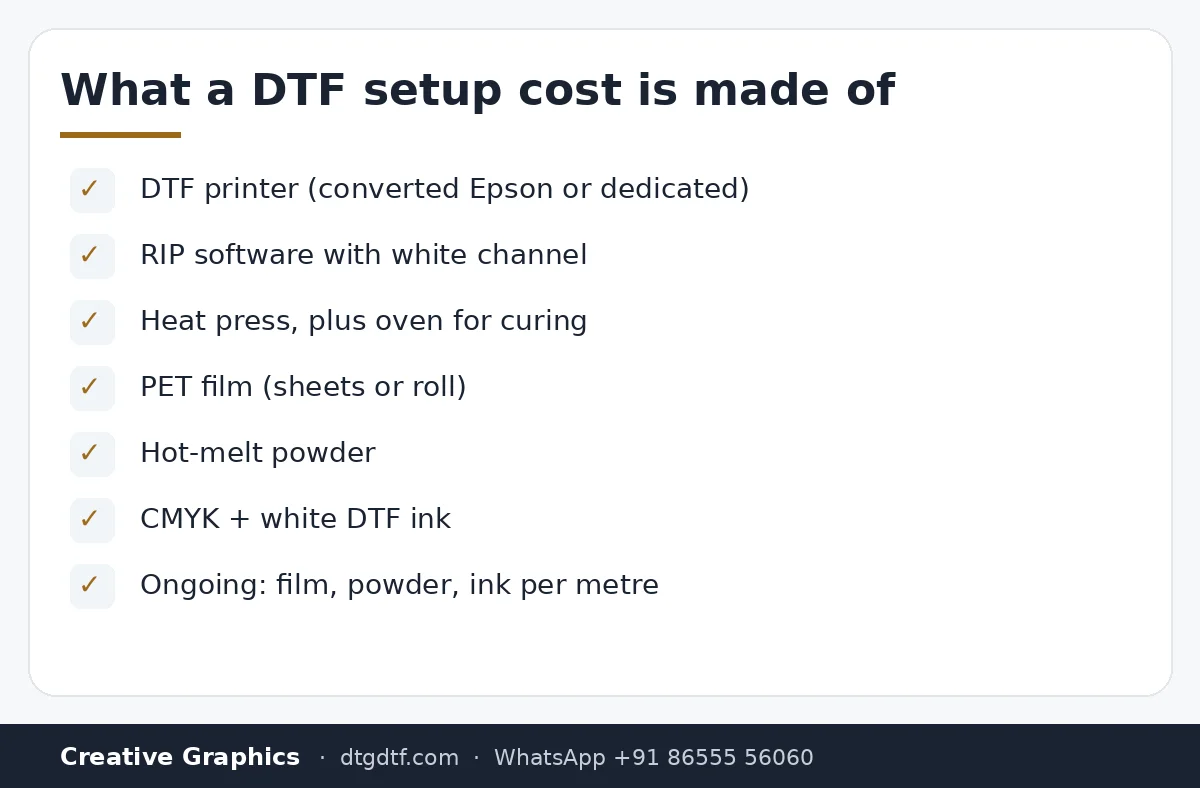
People searched for 'DTF printer price' and landed on this video, so to be straight about it: the price is not one number. A converted Epson, a RIP, a heat press or an oven, PET film, powder and inks make up the setup, and the consumables are the ongoing cost. The 2021 prices are gone; today the converted L18050 is here at ₹92,300 + GST, the full sheet-fed package with oven and press is listed, and the per-metre consumable maths is in the cost guide. If you only need transfers, our printing service starts at ₹110 per metre.
Frequently asked questions
Is DTF one process for white and dark garments?
Yes. The white base prints on the film under the colours, so light and dark tees are pressed the same way. No pretreatment.
What order do the inks print in?
Colours first, then the white base over them, in one pass. The transfer is flipped onto the shirt so the white ends up underneath.
What is the powder for?
Hot-melt powder sticks to the wet ink and becomes the glue layer when cured, so the transfer bonds to fabric when pressed.
How much does a DTF setup cost?
Printer, RIP, press or oven, film, powder and ink. Current prices are on the product pages; the per-metre running cost is in our cost guide.
Is DTF better than DTG?
For us, yes: more durable in the wash, finer detail, no pretreatment, one process for all garment colours.
Related guides
- What is DTF Printing? Direct-to-Film Explained Simply
- DTF Printing Cost Per Meter — Real Numbers from a Print Shop
- DTF vs Sublimation vs Screen Printing — Which is Right for You?
- Starting a DTF Printing Business in India — Real Cost Breakdown
Want today's numbers?
Tell me your daily t-shirt volume on WhatsApp and I will send a setup list with current prices.
WhatsApp +91 86555 56060