DTF Facts from the 2021 Expo Booth: The Process, What Inks Change, and Why You Don't Need a Vacuum
Published 20 July 2021
July 2021, the Screen Printers Association of India expo. The booth was still being set up and I wanted a video done before the crowd arrived, so this is a live DTF session on an Epson L1800: what DTF is, how it prints, what the difference between Chinese and imported Japanese ink looks like on a shirt, and the mistakes people were already making. It is in Hindi. Four years on, the process has not changed and the advice still holds, so here it is in English.
What the video shows
- 0:01 — A live DTF demo: process, Chinese ink vs imported Japanese ink
- 0:15 — The setup on the booth: fusing machine, hotmelt powder, Epson L1800, PNG designs
- 0:41 — Transparent PNG, mirrored; CMYK prints first, white base coat on top
- 1:26 — Two shirts, two inks: brightness and density compared
- 2:32 — Cured sheets can be stored, cut and pressed later
- 3:02 — TPU hotmelt vs polyester hotmelt, printed separately
- 3:40 — Heat press set at 353°F
- 3:51 — Why prints scratch at the exit after the pickup rollers are removed
- 4:41 — Apply powder immediately, shake off the extra
- 5:39 — The booth, SPAI, and the small press used for curing
- 6:12 — Curing in the press with a gap, or in an oven
- 6:36 — Pirated RIP on the booth; the original costs money
- 7:04 — Three minutes of curing, then ready to transfer
- 7:24 — Jugaad technology: nobody can guarantee head life
- 7:54 — You do not need a circulator or a vacuum; shake the CISS daily
- 8:58 — Buying a printer is easy; service and quality are what matter
What was on the table
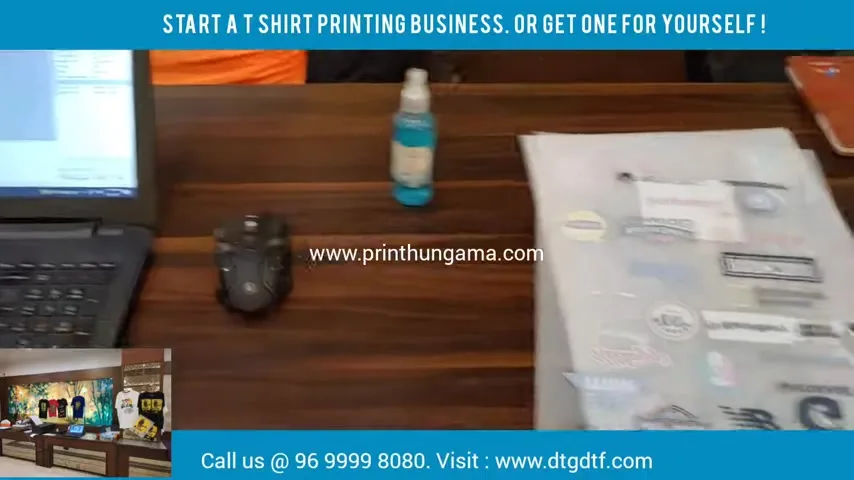
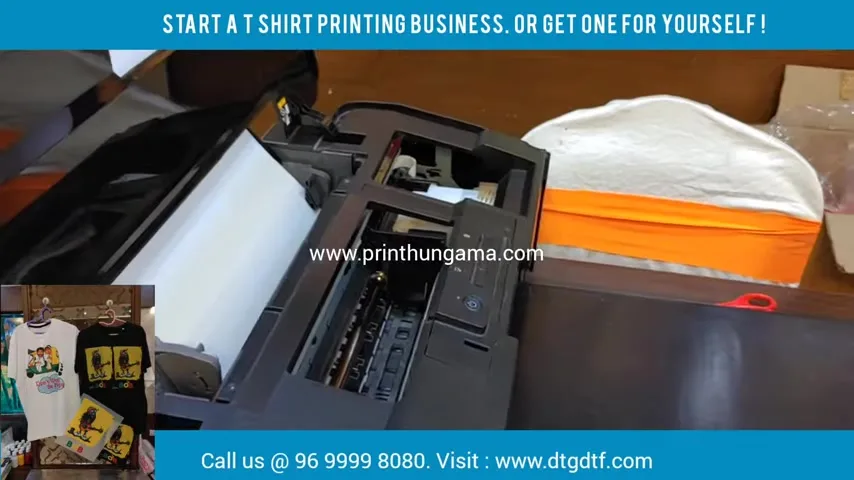
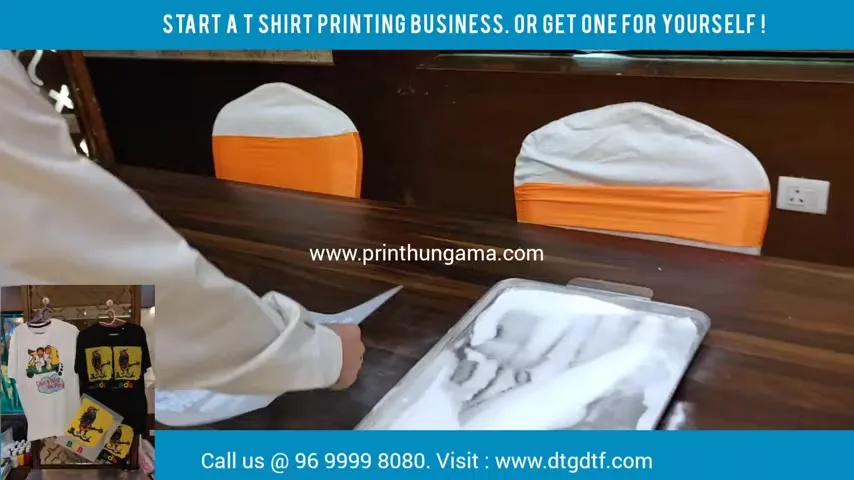
A complete DTF setup as we sold it in 2021: a fusing machine, which most people call a heat press, a jar of hotmelt powder, an Epson L1800 converted for DTF, a PC with PNG designs, and a stack of pre-printed samples and t-shirts. Everything in the video is printed on that one L1800.
How DTF prints
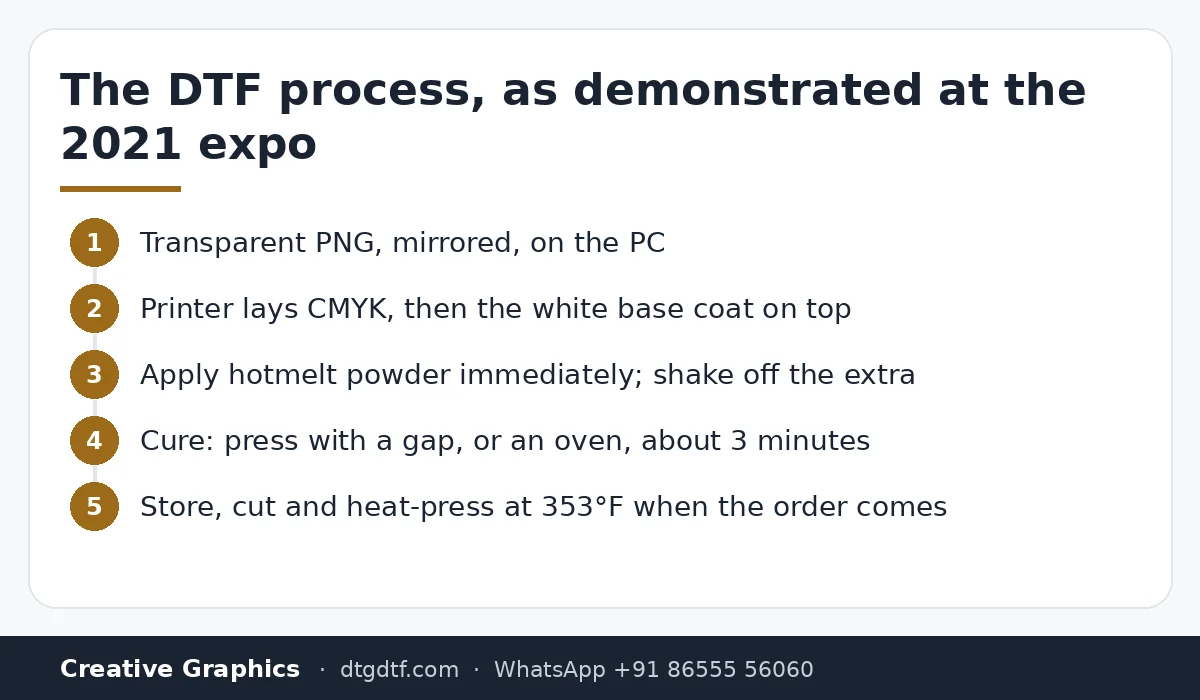
You start with a transparent PNG, no background, mirrored. The printer lays down CMYK first and then a white base coat on top of it, which is what lets the transfer go onto dark garments. On the L1800 you can watch it happen: colour pass, then white pass over it.
Chinese ink versus imported Japanese ink
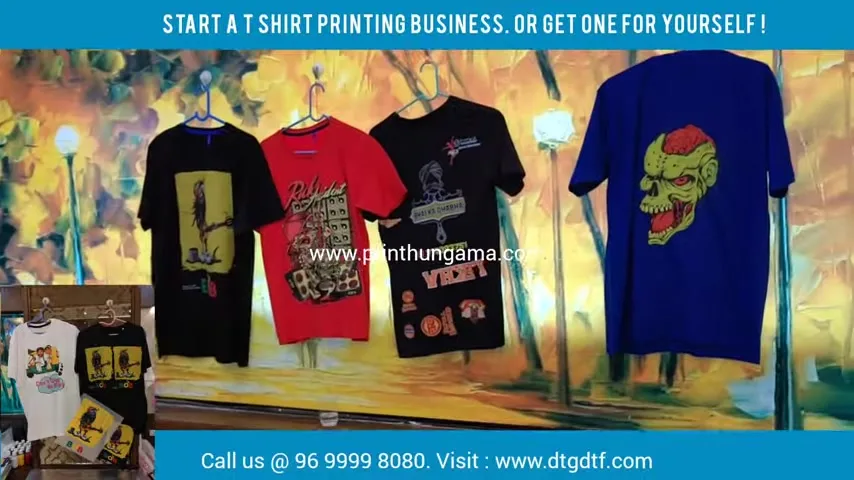
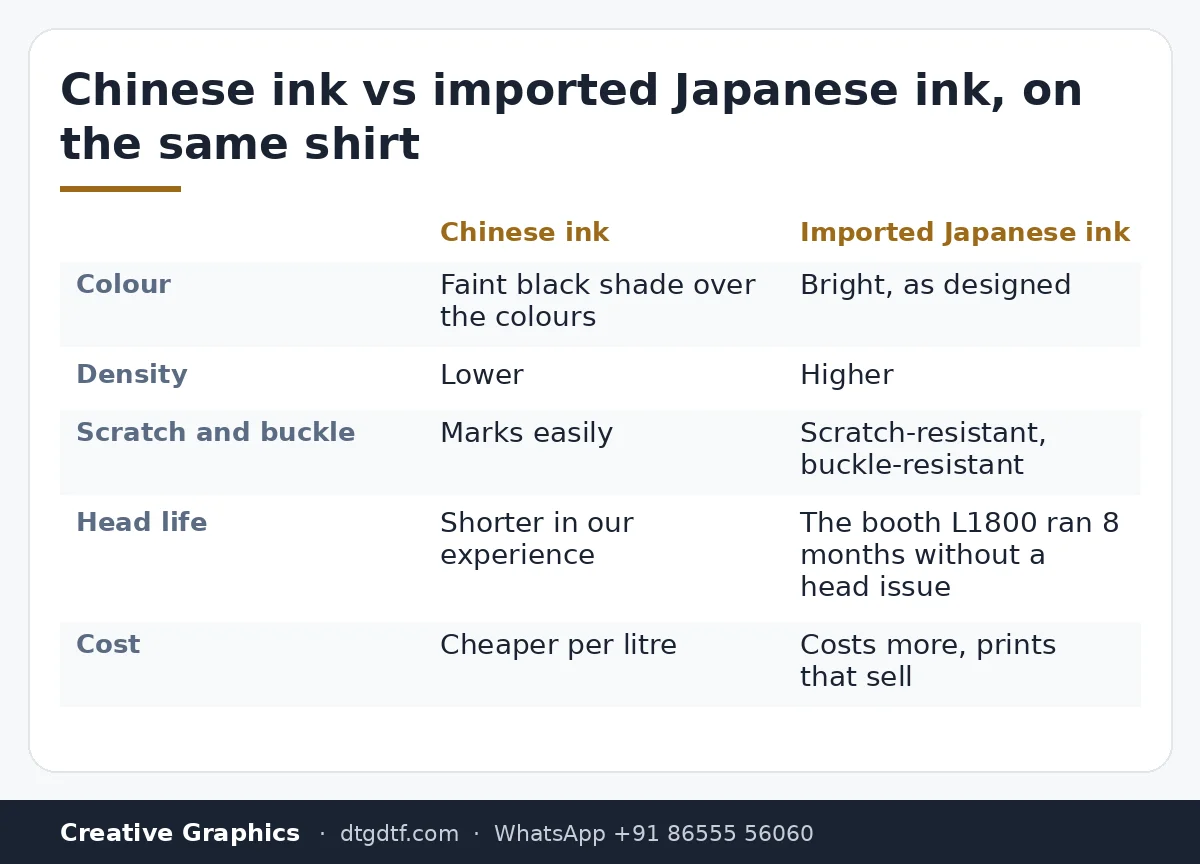
I printed the same image on two shirts with two inks and held them next to each other. On the Chinese ink the colours carry a faint black shade; on the imported ink they are visibly brighter and the density of the print is higher. The imported print is also buckle-resistant and scratch-resistant. I cannot call them "original" inks, but they are imported, good-quality inks, and that difference on the shirt is what you are paying for. Today we sell the inks we use: Jap-X DTF inks.
Powder: TPU or polyester
Hotmelt comes in two kinds, TPU and polyester. I printed one of each to show the difference, and TPU gives the better finish. That is still what we sell: 100% TPU hotmelt powder.
Why prints scratch at the exit
For people already doing DTF, this is the part worth watching. On a converted printer the front pickup rollers are removed. When the sheet comes out it drops; if it drops while the head is still travelling over it, the head-to-sheet distance changes and the head scratches the end of the print. You will see the scratches at the trailing end of the sheet in the video. The fix is in how the sheet exits, which is why our later machines got an output arrangement for it.
Powder, cure, press
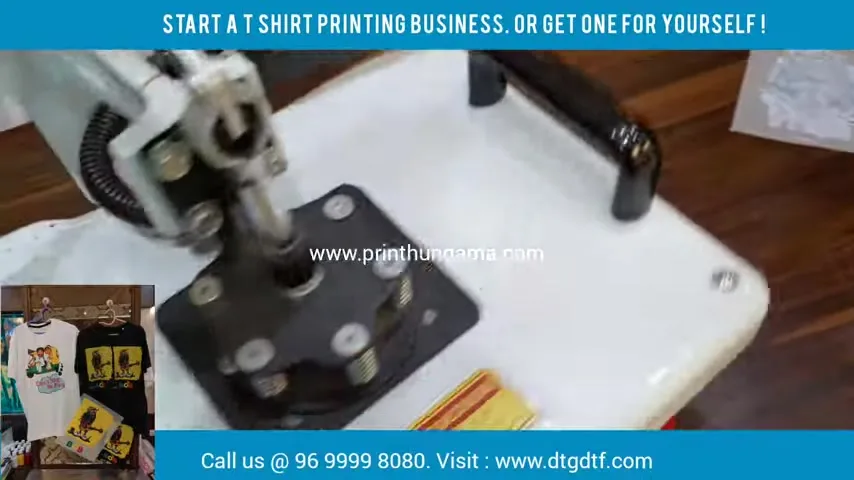
Apply the powder immediately after printing, shake off the extra, then cure. On the booth I used the small press with a gap, white side up, not pressed, for a few minutes; a separate oven does the same job. The press itself was set at 353°F. After curing, the sheets can be stored, cut later and heat-pressed whenever the order comes. Three minutes of curing and the sheet in the video was ready to transfer.
Honest notes from the booth
- The RIP running on the booth was a pirated copy; the original costs money, and I said so on camera. Today every printer we sell ships with an original RIP and dongle.
- This is jugaad technology. Nobody can guarantee head life on a converted printer. The L1800 in the video had been running for eight months without a head problem, but that depends on ink quality, film quality and whether the head ever gets damaged.
- You do not need an ink circulator or a vacuum on a CISS kit. Adding parts only adds maintenance. Shake the CISS bottles every day before you start, that is all.
- You can run this printer for large-scale production, as long as you do that daily shake.
Buying a printer is easy
Selling one is also easy. Service is the most important thing, and quality is the second. I put both inks in front of you; if you can get this quality from Chinese ink, go ahead. The catalogue with all costs was in the description then and the prices are on the product pages now: converted printers start at the L18050 (₹92,300 + GST; the L1800 is no longer sold), and the DTF printing service we run on our own machines starts from ₹110 per metre.
Frequently asked questions
What is the DTF process?
Print a mirrored transparent PNG: CMYK first, then a white base coat on top. Apply hotmelt powder immediately, shake off the extra, cure for a few minutes, then heat-press onto the garment.
What temperature did you press at?
The heat press on the booth was set at 353°F.
TPU or polyester hotmelt?
TPU. Better finish, and it is what we sell.
Why does the end of my print have scratches?
The sheet drops as it exits after the pickup rollers are removed, the head-to-sheet gap changes and the head scratches the trailing end. The exit arrangement is the fix.
Do I need a circulator or vacuum on a CISS printer?
No. Shake the CISS bottles daily before printing. Extra parts only add maintenance.
How long does a converted printer's head last?
Nobody can guarantee it. The booth L1800 had run eight months with no head issue; ink and film quality decide it.
Related guides
- Starting a DTF Printing Business in India — Real Cost Breakdown
- Why Do DTF Prints Peel After Washing? Real Fixes
- DTF Ink Storage in Indian Humidity — Practical Guide
- DTF vs Sublimation vs Screen Printing — Which is Right for You?
Want to see DTF printed in front of you?
Come to the Nerul unit for a live demo, or send a design and we print and ship a sample.
WhatsApp +91 86555 56060